Why are clicks rising without sales?
Compare traffic quality, visitor journeys, measurement and landing-page experience. →
Find which campaigns deserve a closer look, follow their visitors, and see the evidence before changing anything.
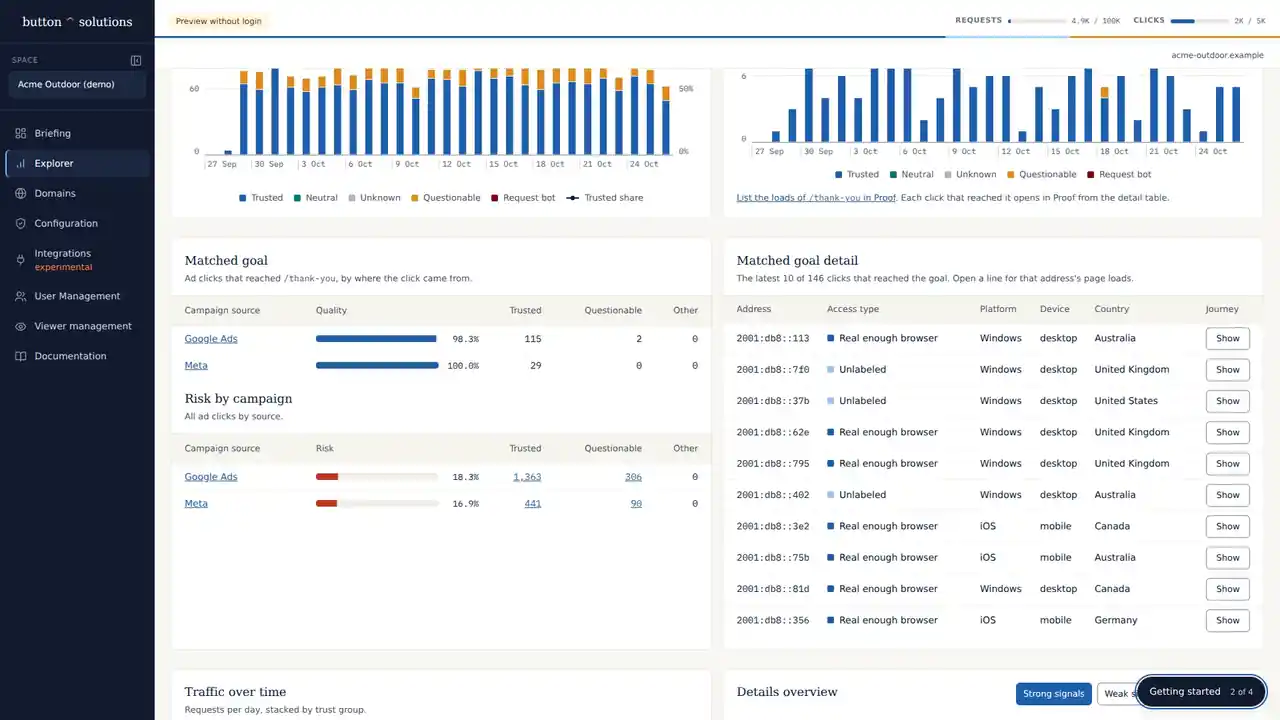
PPC fraud protection that starts with evidence: Button shows which paid visits deserve a closer look. It doesn't change your ad account or exclusion lists; you decide what to act on.
Compare traffic quality, visitor journeys, measurement and landing-page experience. →
Examine tagged visits and automation evidence before drawing a conclusion. →
Compare questionable traffic and observed progression against the site baseline. →
Low engagement isn't proof of automation. Inspect the technical evidence. →
Show the pattern, supporting evidence and a concrete next check. →
Connect a verified site and begin observing visits.
Review network, browser and journey signals before acting on suspicious patterns.
Compare observed visitor progression and make the business implication clear, including what remains unknown.
Keep observing, or, when the evidence justifies it, stop untrusted visits from loading your Google Ads, Meta, Reddit, Taboola or Quora tags on the pages you choose. See tag controls →
In one ecommerce audit, IP addresses flagged as residential proxies reached product and checkout pages at roughly the same rates as unflagged addresses. Three of the seven addresses that reached the payment-success page carried the flag. A success-page visit alone cannot verify a sale, but the comparison shows why it pays to inspect the journey before applying a rule to an entire group.
Read the traffic studyA click is paid for once it happens. Google Ads lets you exclude IP addresses so known sources stop seeing your ads, and it credits some invalid clicks it detects itself. Most ad fraud protection tools work by adding suspect IP addresses to those exclusion lists.
Button doesn't change your bids or exclusion lists. Ad Health shows which traffic deserves investigation; Smart Responder can withhold supported ad tags from untrusted visits on the pages you choose. Neither proves recovered spend or improved bidding.
Explore the research behind our approach: Click fraud studies from real websites, paid clicks from outside the target country and what gad_source says about where a click came from.
Compare suspicious and trusted visits while your existing tags and site rules stay in place.