
How to Make Money from Google Ads in 2026
Learn how to make money from Google Ads in 2026 and beyond.

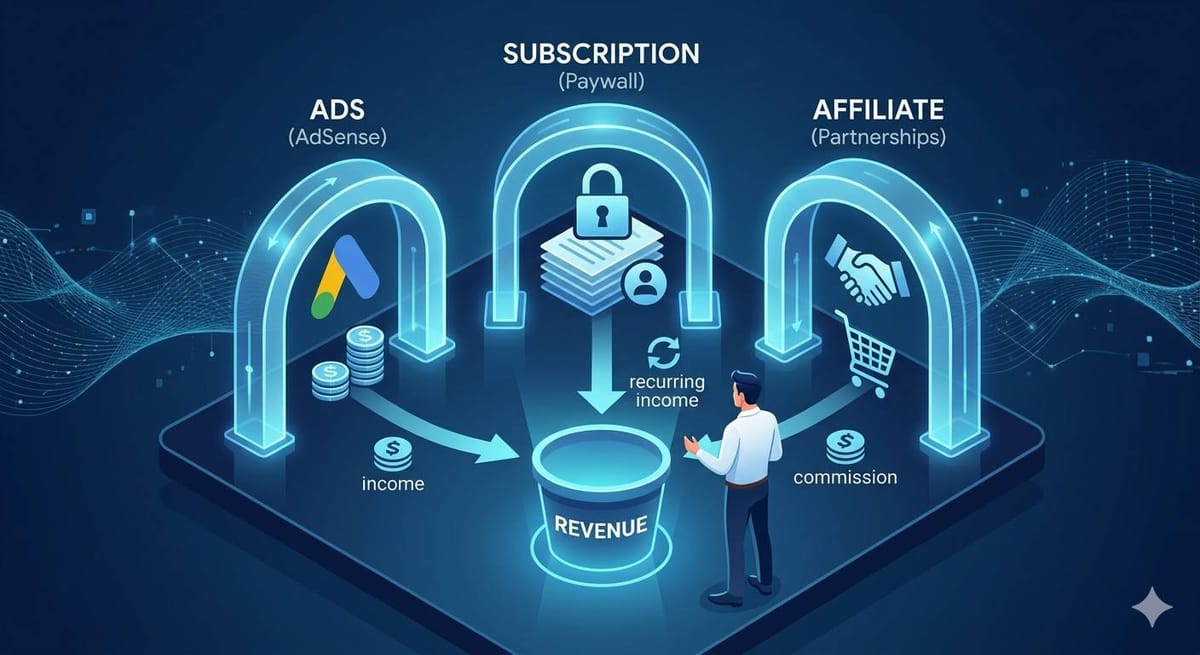
To make money with Google Ads, you must position yourself as the strategic manager of Google's AI ecosystem rather than a manual keyword bidder. Success relies on high-quality first-party data, strict conversion tracking, and AI-driven automation tools like Performance Max.
1. Choose a monetization model
- E-commerce: Sell physical goods via Shopify or WooCommerce using Google Merchant Center Next. Target high-margin, niche items where you can absorb initial ad costs.
- Lead generation: Generate phone calls or form submissions for high-ticket local service businesses (e.g., roofers, lawyers, HVAC). Sell these leads directly to providers or earn a flat retainer.
- Affiliate marketing: Drive targeted traffic to high-commission digital products, software-as-a-service (SaaS) platforms, or financial services. Ensure landing pages strictly comply with Google Ads Editorial Policies.
- Agency services: Manage campaigns for traditional brick-and-mortar businesses. Charge a flat monthly retainer or a percentage of their total monthly ad spend (typically 10% to 20%).
Diving Deeper Into Products to Sell:
1. Service businesses: Pay-per-lead or monthly retainers. Local or national service businesses (e.g., HVAC, legal, coaching) thrive on immediate, high-intent phone calls and form fills.
- Best model: Flat-fee lead generation or percentage-of-ad-spend management retainers.
- Campaign setup: Use Search Campaigns featuring explicit "Call Only" or "Asset Extension" formats. Target high-intent keywords like
emergency plumber near meorcorporate tax attorney pricing. - Key metric: Cost per acquisition (CPA). Optimize for phone call duration over raw website clicks.
2. Digital products: Direct-response e-commerceDigital products (e.g., SaaS, courses, downloadable templates) offer near-100% profit margins, allowing you to bid aggressively on competitor terms.
- Best model: Direct sales via value-based tier structures (e.g., monthly subscriptions or one-time lifetime access).
- Campaign setup: Deploy Search Campaigns targeting competitor brand names (e.g.,
alternatives to [Competitor SaaS]) alongside Performance Max campaigns utilizing strict audience signals built from your current customer list. - Key metric: Customer lifetime value (LTV) to CPA ratio. Aim for an initial break-even on day one, then capitalize on long-term subscription retention.
3. Physical products: Target ROAS e-commerce physical goods face tight product margins, shipping overhead, and intense market competition.
- Best model: High-volume retail sales driven by automated asset matching.
- Campaign setup: Utilize Performance Max integrated directly with Google Merchant Center Next. Segment your inventory into distinct product buckets: place your top 20% highest-margin best-sellers into a dedicated high-budget campaign, and relegate "zombie" products to a low-budget, high-ROAS campaign.
- Key metric: Return on ad spend (ROAS). Your minimum profitable ROAS must exceed your cost of goods sold (COGS) and operational expenses.
4. Consulting: High-ticket client acquisition consulting relies on trust, authority, and relationship building. Cold traffic rarely buys high-ticket consulting packages directly from an ad.
- Best model: Multi-step funnel monetization (advertising an un-gated asset or low-friction event to book an intake call).
- Campaign setup: Drive high-intent Search traffic to a value-first landing page (e.g., a free case study, video masterclass, or whitepaper). Once users engage, deploy a dedicated YouTube and Display Remarketing campaign to keep your brand top-of-mind until they book a consultation.
- Key metric: Earnings per click (EPC) and application submission rate.
2. Execute the setup sequence
[Deep Conversion Tracking Setup] ──> [Exact Match Testing Campaign] ──> [Scale via Performance Max & AI]
- Deploy advanced tracking: Install the Google tag and configure Enhanced Conversions. If you run lead generation, set up offline conversion tracking to feed CRM data back to Google.
- Launch an exact-match test: Start with an explicit, tight list of exact-match keywords to gather clean data. This blocks Google's AI from wasting your budget on loose, irrelevant search terms early on.
- Transition to smart bidding: Once your campaign generates 30+ conversions within 30 days, change your bidding strategy to Target CPA or Target ROAS to let the algorithm find profitable audiences.
3. Protect your profit margins
- Calculate unit economics: Never run ads without knowing your target metrics. Use the formula below to find your maximum allowable cost-per-click before spending money:
\(\text{Max\ CPC}=\text{Product\ Profit\ Margin}\times \text{Website\ Conversion\ Rate}\) - Audit search terms daily: Check your search terms report every 24 hours. Aggressively add non-converting or irrelevant phrases to your account-level negative keyword list.
- Diversify ad assets: When using Performance Max, supply high-resolution images, 4K vertical video assets, and highly specific text headlines. Low-quality creative assets degrade your ad placements and increase your costs.
Core Strategies for Google Ads
1. Build a bottom-up funnel
--
Prioritize the highest-converting segments first.
- Bottom: Launch high-intent Search or Shopping campaigns focusing on your best-selling, highest-margin product or service.
- Middle: Layer in remarketing and Performance Max campaigns to re-engage past website visitors.
- Top: Introduce Demand Gen or video campaigns once lower-funnel tactics are consistently profitable.
2. Guide AI smart bidding with data

Google's automated bidding is powerful, but it requires strategic guardrails.
- Conversion tracking: Ensure deep tracking is functional so the algorithm optimizes for actual revenue rather than cheap clicks.
- Target ROAS/CPA: Transition from "Maximize Conversions" to Target CPA or Target ROAS once you accumulate 30+ conversions. Set realistic targets based on actual profit margins.
- Value-based bidding: For B2B lead generation, import offline conversion data using GCLID (Google Click ID) to teach AI to bid on qualified leads over raw form fills.
3. Implement strict match type segmentation
Avoid blending all match types into a single ad group, which leads to budget dilution.
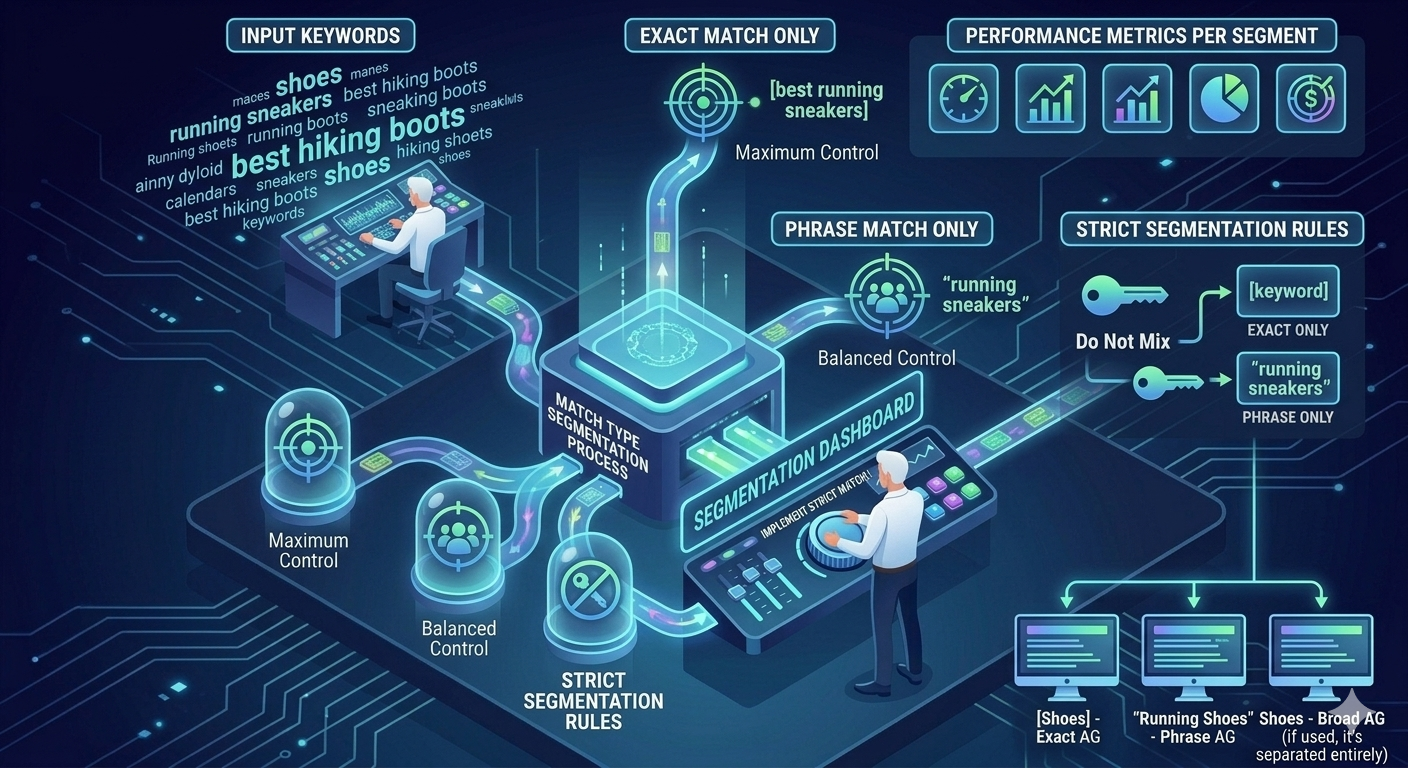
- Isolate broad match: Keep broad match keywords in separate, standalone campaigns. Pair them with strict Target CPA constraints so the algorithm does not bid on irrelevant terms.
- Exact match testing: Utilize exact match in new campaigns with restricted budgets to maintain full control over your initial search terms.
4. Optimize the "Zombie Product" approach for e-commerceMaximize standard shopping or Performance Max campaign budgets using product segmentation.
- Best sellers: Allocate 70% to 80% of your budget to your top-performing, highly profitable items.
- Zombie products: Place low-performing or zero-click products into a separate campaign with a small budget allocation (10% to 20%) and high ROAS restrictions. This forces Google to give them impressions without harming your main campaign performance.
5. Prioritize ad relevance and quality scoreA higher Quality Score directly lowers your cost-per-click (CPC).
- Ad copy specificity: Write responsive search ads with natural, benefits-focused copy. Avoid generic call-to-actions.
- Keyword integration: Ensure the primary keyword triggers clear headline matches.
- Landing pages: Never send all traffic to the homepage. Align the search term directly with a dedicated, fast-loading landing page to maximize conversion rates
The Ideal Funnel with Google Ads
The most effective conversion-optimized funnel follows a three-stage visual architecture that minimizes friction and maximizes user intent. [1, 2]
1. Top of funnel: The landing page layout your landing page must load in under two seconds and pass the "five-second test" (a user must understand what you offer immediately).
- The hero section (Above the fold):
- Primary headline: Focus strictly on the core benefit or outcome (e.g., "Double Your Inbound Leads Without Increasing Ad Spend").
- Sub-headline: Explain how you deliver that benefit in one short sentence.
- Hero media: A high-context image of your product, a 60-second explainer video, or a preview of the digital asset.
- Primary call-to-action (CTA): A high-contrast button featuring action-oriented text (e.g., "Get My Free Strategy Plan"). Place a single, low-friction form field (email or phone) directly next to or inside it.
- Middle section (Social proof & value):
- Social proof banner: Display recognizable client logos or 5-star review badges directly below the hero section.
- The 3-benefit matrix: Use three parallel, icon-based columns detailing your unique selling propositions (USPs). Keep text under 15 words per column.
- Deep social proof: Embed screenshot-style reviews or short video testimonials highlighting specific revenue, time, or cost savings.
- Bottom section (Friction reduction):
- Frequently asked questions (FAQ): Use an accordion-style dropdown to address the top 4 to 5 common sales objections.
- Secondary CTA: Repeat the primary hero button at the very bottom of the page to eliminate scrolling.
2. Middle of funnel: The frictionless checkout / intake layoutOnce a user clicks the CTA, transition them to a dedicated page designed exclusively to collect data or payment.
- For lead generation / consulting: Use a multi-step conditional form (e.g., Typeform or Typeflow) instead of a long single-page form.
- Step 1: Ask an easy, low-friction question (e.g., "What is your current monthly revenue?").
- Step 2: Ask the secondary qualifiers.
- Step 3: Collect sensitive contact info (Name, Email, Phone) on the final step after they have already invested time.
- For e-commerce / digital products: Use a single-page 2-column checkout.
- Left Column: Data entry (Shipping, Billing, Contact info) utilizing automated address auto-complete tools.
- Right Column: Order summary containing security badges, a thumbnail of the item, and a clear breakdown of the total cost.
3. Bottom of funnel: The monetization boost layoutDo not send users to a generic "Thank You" page. Use the immediate post-purchase moment of maximum engagement to increase your average order value (AOV).
- Step 1: One-click upsell (OTO): Present a highly relevant, complementary offer before showing the final receipt page. The user can add it to their order with a single click without re-entering payment details.
- Step 2: The dynamic confirmation page:
- Confirm the order details clearly at the top.
- Embed a clear Next Steps checklist (e.g., "Check your inbox for your login details" or "Book your onboarding call on the calendar below").
Ultimately, scaling a profitable Google Ads framework in 2026 demands that you transition from a manual keyword bidder to a strategic manager of Google’s AI-driven ecosystem.
By aligning your monetization model—whether that means targeting high-intent phone calls for local services, scaling e-commerce via automated Performance Max "zombie product" segmentation, or driving multi-step consulting funnels —with a lightning-fast, conversion-optimized landing page, you secure a structural advantage over your competitors.
Success hinges on feeding Google's smart bidding algorithms immaculate, first-party data via Enhanced Conversions and strict value-based tracking while aggressively pruning your daily search terms report to insulate your profit margins.
A critical piece often left out of early campaign planning is the mandatory integration of Consent Mode V3 and strict privacy-compliant tracking loops, which are legally required to prevent data degradation and keep your audience signals accurate as machine learning scales your account.
Implement these guardrails, build your funnel from the bottom up, and let data-backed automation compounding over time do the heavy lifting for your business.